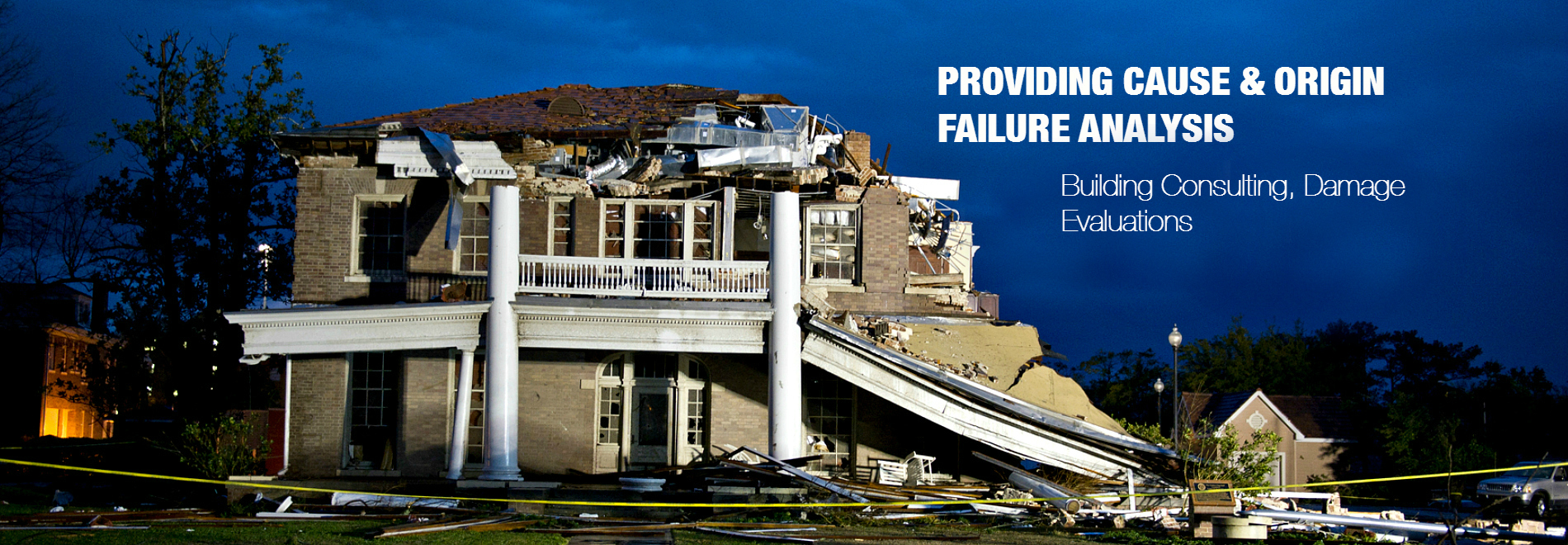
Forensic Engineering Florida
Types of Projects
- Vehicle Impacts with Structures
- Flood damage investigations
- Roof - Residential / Commercial / Religious Buildings
- Stucco & Synthetic Stucco (EIFS)
- Settlement & Subsidence
- Fire Damage Assessments
- Corrosion & Spalling of Concrete
- Chinese Drywall (Reactive drywall)
- Moisture Intrusion
- Wood Destroying Organism (WDO) damage
- Organic Growth - Mold & fungus
- Errors & Omissions in design
- Deflection & Structure Collapse
- Hydrostatic water pressure, storm surge & breaking wave damages
- Basement & retaining wall Failures
- Tile & Wood Flooring
- Steel Failures including weld & bolt connections
- Marine Structure Failures
- Failures in Design, Quantity, Material, Installation, Workmanship
- Builder's Risk Investigations
- Homeowner's Warranty Investigations (new construction)
- Post-tensioned slab and tendon failures
Marine Structures – Was your pier or bulkhead damaged during a storm? Or perhaps you realize it needs some type of maintenance but aren't sure where to start? Did you know that storm surge is a major culprit in damage to marine structures during hurricanes? Well, first we start with a structural assessment of your marine structure. Once we determine the cause of damages and the condition of your structure, we proceed to designing the repairs to ensure that your marine structure will last through many more years of winds and floods.
Vehicle Impacts with Structures – Has a vehicle impacted your building or other structure? Should you just call a general contractor to make repairs? How do you know if any other integral parts of your building have been affected, like the upper levels or the concrete slabs? Not only do we provide a full structural assessment of the damages, we also design the structural repairs so that you rest easy knowing that professional engineers inspected the damage and looked at the various structural components of your building to ensure that the integrity of the building was not damaged. If it was, then we'll design the repairs to fix the structural components, too, such as the roof, masonry walls or footings.
Floods – With the months of headlines that Superstorm Sandy made last year, homeowners and insurance carriers alike are asking what we could have done different. Was wind or flood the cause of damage? How does anyone start with repairs? How do I know that no other systems were affected, like the foundation? We provide solid answers to your questions including the type of flood zone that you are in, and then we proceed with designing retrofits to your home or perhaps lifting your home to be above the base flood elevations (BFE) for your area.
Roofs – Yes, all types of roofs, but it's not just about roof leaks, was your roofing product even installed correctly? What sort of maintenance am I supposed to do on my metal roof and when? From your three-tab asphalt composition shingles (standard shingles) to metal roofs and the latest and greatest commercial roofs like thermoplastic polyolefin (TPO), ORACLE provides expert roof inspections to find the cause of the issues, and then we design the repairs. Often times, you will get a report from an expert and are left to your own devices to figure out the next step. We provide leadership and guidance to ensure that you know the cause of damage and have the right knowledge to proceed with repairs.
Stucco & Synthetic Stucco (EIFS) – Just when we all thought that synthetic stucco would not recover from the multiple lawsuits against it for water penetration problems dating back to 1995, it is making a great comeback. The original problems were caused by factors including: no window sill flashing, no kick-out (diverter) flashing and no through-wall flashing for decks. Your issues could be caused by the same. We are certified to inspect exterior insulation and finish systems (EIFS) so that you have an independent party to let you know whether it was correctly installed and why it is damaged. Is water penetrating through your walls now, possibly causing organic growths such as mold within your walls? ORACLE provides you with expert reports detailing the causes of damage to your stucco, whether it is an installation issue, or poor design or even poor workmanship.
Settlement & Subsidence – Did you know that the Florida Statutes indicate that the Insurance Carrier must confirm structural damages before a professional engineer can be engaged to inspect the structure and perform soils testing for possible sinkholes? Thus, if there is no structural damage, then everything stops and the property claim will not move forward. If you know you are in an area prone to sinkhole development or if there are nearby sinks around your property, then it would be prudent to have ORACLE inspect your premises for structural damages to determine whether further testing is required. In addition, ORACLE provides expert analysis for the causes of settlement. Settlement is particularly troubling because the latest analysis techniques indicate that additional forces and rotations are added to the structural joints around the area of settlement. But, of utmost importance is, what caused the settlement and how do we repair it? Determining the cause is as important as determining the repair because how does anyone know if the repair will work if not enough due diligence was performed to know the cause? Is there collateral evidence to even determine that the building is settling, like cracks in concrete slabs or columns? Does a liquid level system need to be installed to monitor the building full time and know within a fraction of an inch that the building is shifting vertically downward?
Post-tensioned structures – These foundation systems utilize steel tendons. Each tendon is typically composed of seven (7) high strength steel wires wound together in a helical pattern and placed inside a plastic duct. The tendons and plastic ducts are placed in the concrete formwork before the concrete is poured. Once the concrete is allowed to cure for several days, the tendons are pulled at one or both ends and tightened. Two issues arise from time to time: one – if an individual drills into the slab without first locating the tendons, the tendon may be nicked with a drill bit causing the tendon to snap, rendering the tendon useless to carry any loads; two – if the plastic duct is penetrated by moisture, the tendons may corrode within the duct, which decreases its load capacity and may also cause the tendon to snap. If you see small cone-shaped volumes of concrete sticking out of the foundation with an attached cable, then you may have damaged tendons within your foundation and you should immediately call an expert to investigate.
Fire Damage Assessments – Has your residence or commercial building been damaged by a fire? Did you know that a very minor loss of the cross section of a wood member causes that member to be useless to carry any loads? Are you aware of the collateral damages to other materials such drywall, steel, roofing and concrete within the vicinity of the fire? Before hiring a company to just repair what was burned, perhaps a more cautious solution will be heeded: retain an engineer to assess the damages and design appropriate repairs before another company arrives to carry off the complete interior of the building and practically re-build the interior at your cost. Perhaps you have an older building so just removing and repairing with like-in-kind materials will not be sufficient to withstand the loads from the rooftop packages (RPU) on the roof? At ORACLE, we provide the expertise to assess the damages using the latest technical papers and investigation techniques. Perhaps after a fire, maybe it is time for an upgrade to newer walls with higher fire ratings? We guide you through this process so that you make informed decisions.
Corrosion and spalling – Do you have steel members which are exposed to the elements and are corroding? Is your building located close to the ocean and you see rust but aren't sure what to do about it? Are pieces of concrete crumbling (spalling) off of beams, slabs or columns at your building? Concrete which is falling off could be an indicator of a larger problem such as corroded steel rebar in the structural components of your building or high moisture content in the concrete itself. Whatever the cause, ORACLE finds it with certainty.
Chinese (Reactive) drywall – Even though it has been several years since we stopped importing defective gypsum board from China, the claims are still coming in and reactive drywall is still being uncovered. A visual inspection alone is insufficient to determine whether you have this drywall which may cause health problems, especially in children. Samples of the wall must be sent off to a specialty lab to be tested for the presence of various chemicals. If you suspect you have Chinese drywall, check copper wires for black dust or check the back of the wall for Chinese markings. A common misconception is that just because it has Chinese markings, it means that you have reactive drywall and this is not true, it is just a possible sign of reactive drywall. The reactive drywall was imported from a certain province in China, thus, not all of it is reactive. Only lab testing together with some tell-tale signs at the building will help determine whether you need to replace all of the drywall in your home including ceilings and walls to protect your health.
Moisture intrusion – At times, building owners wait to repair those small leaks or drywall stains and then a storm hits that catches us all by surprise - think Superstorm Sandy hitting at the very end of the Hurricane Season when most Forensic engineering firms were packing up and looking to the following year after a slow Hurricane season. Moisture intrusion never gets any better the longer it goes unrepaired as mold may set in after just a couple days, possibly requiring removal of finishes that would normally have been fine. We have been witnesses to $50,000 property claims that turn into $350,000 property claims after moisture damage from storms went unrepaired. As engineers, we not only find the damages, we design the repairs so that you may immediately get the construction documents into the hands of a general contractor to perform the work, hopefully before the next storm comes through.
Wood Destroying Organisms – We don't do pest control, but ORACLE does analyze the structural damages caused by all sorts of pests, even bigger ones like bears (yes, bears). When a section of a member is removed or when we find evidence of wood destroying organisms, the ability of that member to carry its design loads is decreased or even completely removed, especially when the insects burrow tunnels into the wood. The knowledge of when to replace the lumber is crucial, especially when floors become loaded with china cabinets and pianos.
Organic Growth – The presence of molds and fungi are typically the result of a failure in another material or system, such as roof and window leaks, moisture penetration through stucco or EIFS, or even moisture coming up from the ground due to heavy rains and flooding. Does your building have a strange or moldy odor after heavy storms? Retain the experts at ORACLE to determine the initial material failures that have lead to the moisture intrusion, and thereafter, the mold.
Errors & Omissions in Design – Building codes, wind/seismic codes and design codes are updated regularly to keep up with advancements in materials and research. In addition, the referenced codes such as American Standard of Testing and Materials (ASTM) are also updated to continue the innovation in construction for the lightest, strongest and most fire-proof materials. Architects and engineers must remove themselves from the business side and even engineering side to just read and study to keep up with the changes, or risk becoming involved in a liability suit over missing or incorrect details. As design engineers, we know the risk of this profession and are thankful to be involved on both the design and the forensic side as that keeps us knowledgeable as to why the lawsuits are being filed against those in our profession.
Deflection & Structure Collapse – Did you know that humans with the naked eye can detect an out-of-plumb column of one inch in 100 feet? If you think reinforced concrete is flexible, well you are correct, sort of. Reinforced concrete is concrete that has steel added to it to make the system more bendable. With the bending, also come small cracks in the concrete, some of which are expected and part of the design. Did you know that as you increase the carbon content in steel that it becomes much stronger but more brittle? Deflection is a technical term to define the vertical distance that a horizontal member (e.g., a beam or slab) is bending. Or in the case of a column, deflection is the horizontal distance that the column is out-of-plumb. Deflection in and of itself is typically not a cause for concern as buildings are designed to have some sort of movement, or else members would be so massive that there would be no room for habitation within the building, but the deflection should not be noticeable with the naked eye. If you suspect a structural member has recently moved just by naked eye measurements, do not hesitate to contact ORACLE to immediately determine the cause and either design immediate temporary shoring or design full-scale repairs. Perhaps you had walls or roof trusses collapse during construction or after a heavy storm, ORACLE responds to your emergency as if it were one of the buildings we designed ourselves.
Do You Have A Project We Can Help With?


Lorem ipsum dolor sit amet, mus purus id, lectus mus phasellus vestibulum auctor proin. Nunc tristique rhoncus, tempus neque cras gravida turpis, mauris phasellus est pellentesque tristique donec dapibus, pede mollis, lacinia eleifend egestas at. Donec a quam gravida. In et nonummy velit urna magna, non vivamus sed, et neque mollis ullamcorper alias, semper vulputate dictumst, cum suscipit. Gravida lectus deserunt pede non, tempor semper vitae donec, dignissim elit interdum sed, a dapibus, volutpat feugiat eleifend lorem dictum dolor. Ipsum odio laudantium duis ac est, consequat enim curabitur egestas per, enim risus urna eget tristique, lorem sagittis mollis mauris, massa vestibulum sollicitudin scelerisque.